International Model and Actress Yuki Kaneko Takes Center Stage as Ariwara no Narihira in a Cultural Celebration Reviving the Beauty, Literature, and Traditions of Japan’s Heian Era
The elegance and romance of Japan’s Heian period returned to the stage in a remarkable celebration of history, literature, and traditional artistry at Nashinoki Shrine, located beside the Kyoto Imperial Palace.
Titled “Reawakening the Customs of the Gods (Teburi),” the traditional cultural event was presented on the shrine’s historic Noh stage, transforming the setting into a vivid portrayal of classical Japan. Through historical costumes, performance, dance, and scholarly commentary, the program invited audiences to rediscover the world of The Tale of Ise, one of Japan’s most celebrated works of classical literature.
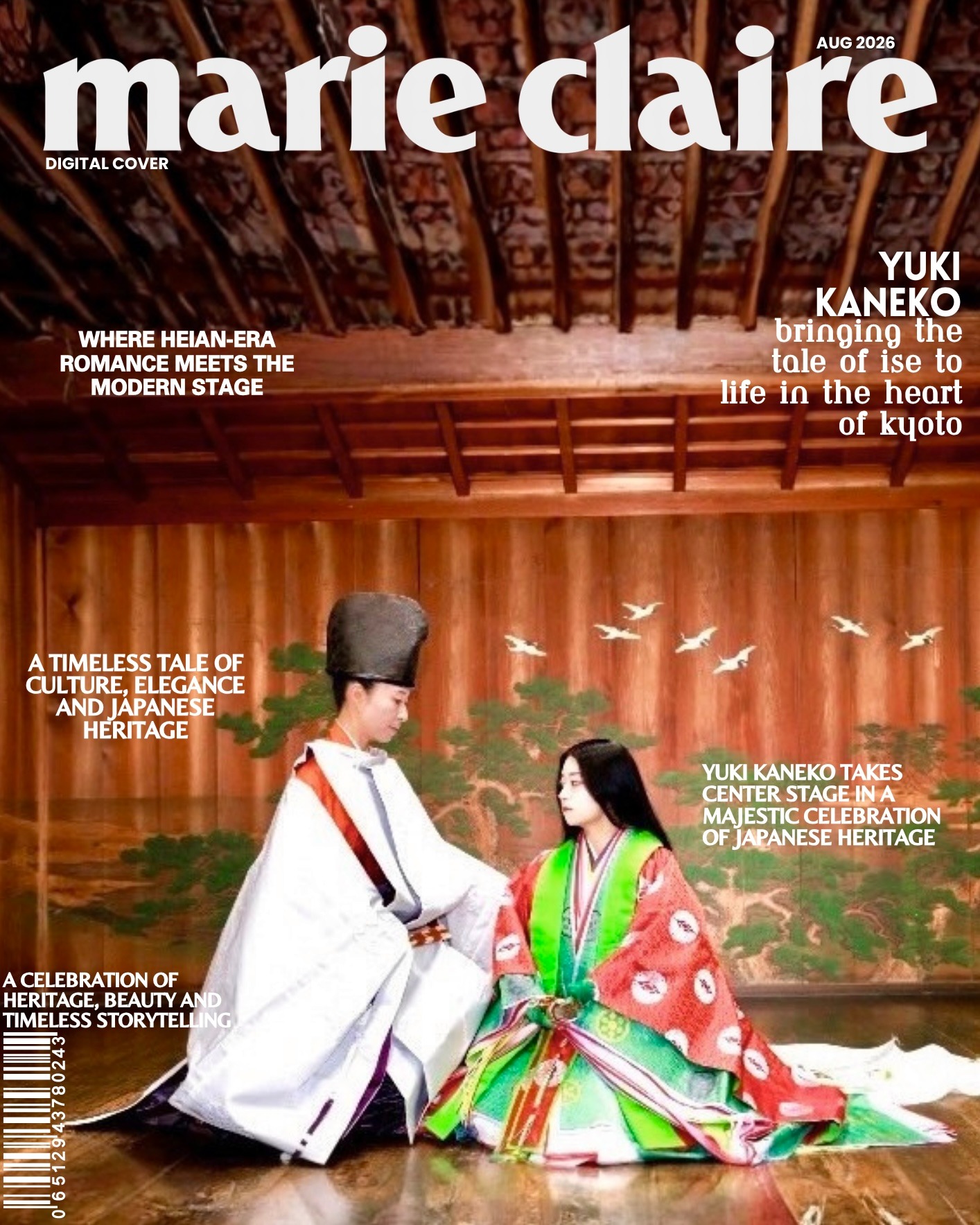
At the heart of the production was Yuki Kaneko, an internationally active professional model and actress with a career extending to the United States and beyond. Taking on the starring role of Ariwara no Narihira, Kaneko brought a distinctive presence to one of the Heian era’s most legendary figures—a poet and aristocrat whose life and romantic legacy have long been associated with The Tale of Ise.
Opposite Kaneko, Futoka Makino portrayed Fujiwara no Takaiko, Narihira’s celebrated love interest. Together, their performances evoked the refinement and emotional depth of Heian-era romance, creating scenes reminiscent of classical Japanese picture scrolls brought to life.
Where History, Fashion and Performance Meet
The event went beyond theatrical storytelling, offering audiences an immersive encounter with the aesthetics and customs of classical Japanese court culture.
Yoji Yasuda, Board Director of the History and Tradition Forum and Chairman of the Narihira Association, served as keynote lecturer. Yasuda provided insightful commentary on the historical and literary world surrounding The Tale of Ise, while also exploring the extraordinary craftsmanship and symbolism of the Junihitoe, the elaborate twelve-layered ceremonial robes associated with noblewomen of the Heian court.
Against the architectural beauty of Nashinoki Shrine’s Noh stage, performers appeared in vibrant historical attire, allowing the colors, silhouettes, movement, and traditions of another era to become part of a living cultural experience.
The ceremonial dressing was undertaken by Satsuki Nakai, serving as Emon-ja, while Tensai presented a creative Japanese dance offering, further enriching the event’s fusion of heritage and performance.
Yuki Kaneko Steps Into a Legendary Role
For Kaneko, whose professional journey has crossed the worlds of modeling, acting, pageantry, fashion, business, and cultural engagement, portraying Ariwara no Narihira represented another distinctive chapter in an increasingly international career.
Rather than simply appearing in historical costume, the role required her to embody a figure whose poetry, romantic life, and cultural influence have endured for centuries.
Her appearance also demonstrated the ability of traditional Japanese culture to speak to contemporary and international audiences. Through performance, fashion, and storytelling, Kaneko helped connect a classical literary figure with a new generation while honoring the cultural foundations from which the story emerged.
The unconventional casting also gave the presentation a contemporary dimension: an internationally recognized female performer stepping into the role of one of classical Japan’s most iconic male figures while preserving the elegance and spirit of the original narrative.
Reviving Heian Beauty for a New Generation
The Tale of Ise has survived through generations not simply as literature, but as an enduring representation of Japanese aesthetics, poetry, relationships, and the emotional sophistication of court life.
“Reawakening the Customs of the Gods (Teburi)” approached that heritage as something to be experienced rather than merely remembered.
The historic surroundings of Nashinoki Shrine provided a powerful setting for that vision. With the Kyoto Imperial Palace nearby, the presentation connected location, costume, literature, movement, and performance to create an atmosphere in which the distant Heian world could momentarily feel present again.
Producer Takeshi Makino brought together scholars, performers, traditional dress specialists, and artists to create an event that celebrated preservation while demonstrating that centuries-old traditions can continue to evolve through thoughtful contemporary interpretation.
A Cultural Bridge Between Past and Present
For Kaneko, the performance reflects a broader career defined by versatility and an ability to move between cultures and creative disciplines. Her international work as a professional model and actress has given her a platform that reaches beyond Japan, while projects such as this allow her to bring Japanese heritage into a wider cultural conversation.
Her portrayal of Ariwara no Narihira at Nashinoki Shrine ultimately represented more than a performance. It became part of an effort to keep traditional stories visible, relevant, and emotionally resonant in the modern world.
As historical costumes swept across the Noh stage and the romance of The Tale of Ise unfolded once again, “Reawakening the Customs of the Gods (Teburi)” demonstrated how art can connect centuries—allowing audiences not only to observe history, but to experience its beauty anew.
Event Overview
Event: Reawakening the Customs of the Gods (Teburi)
Venue: Nashinoki Shrine Noh Stage, adjacent to Kyoto Imperial Palace
Producer: Takeshi Makino
Keynote Lecturer: Yoji Yasuda — Board Director, History and Tradition Forum / Chairman, Narihira Association
Ariwara no Narihira: Yuki Kaneko — Professional Model & Actress
Fujiwara no Takaiko: Futoka Makino
Emon-ja (Dresser): Satsuki Nakai
Dance Offering: Tensai — Creative Japanese Dance
Through its combination of classical literature, ceremonial dress, scholarly interpretation, and live performance, the event offered a striking reminder that Japan’s cultural heritage remains not only a treasured part of its past, but a living source of beauty, creativity, and inspiration for the future.